The story of Fortune Mollot, as told by his great-grandson V. A. Mollot.
This is the story of Fortuné Louis Mollot as told by his great grandson Victor A. Mollot. It has been based from the research that my wife Lucille and I have been able to do in the last number of years, from stories told by his offspring, from his own written Memoires that he called “Les Mémoires de Fortuné Mollot” dated July, 1912 of 112 pages as well as numerous opportunities that my wife Lucille and I have had traveling in France and doing ancestral research.
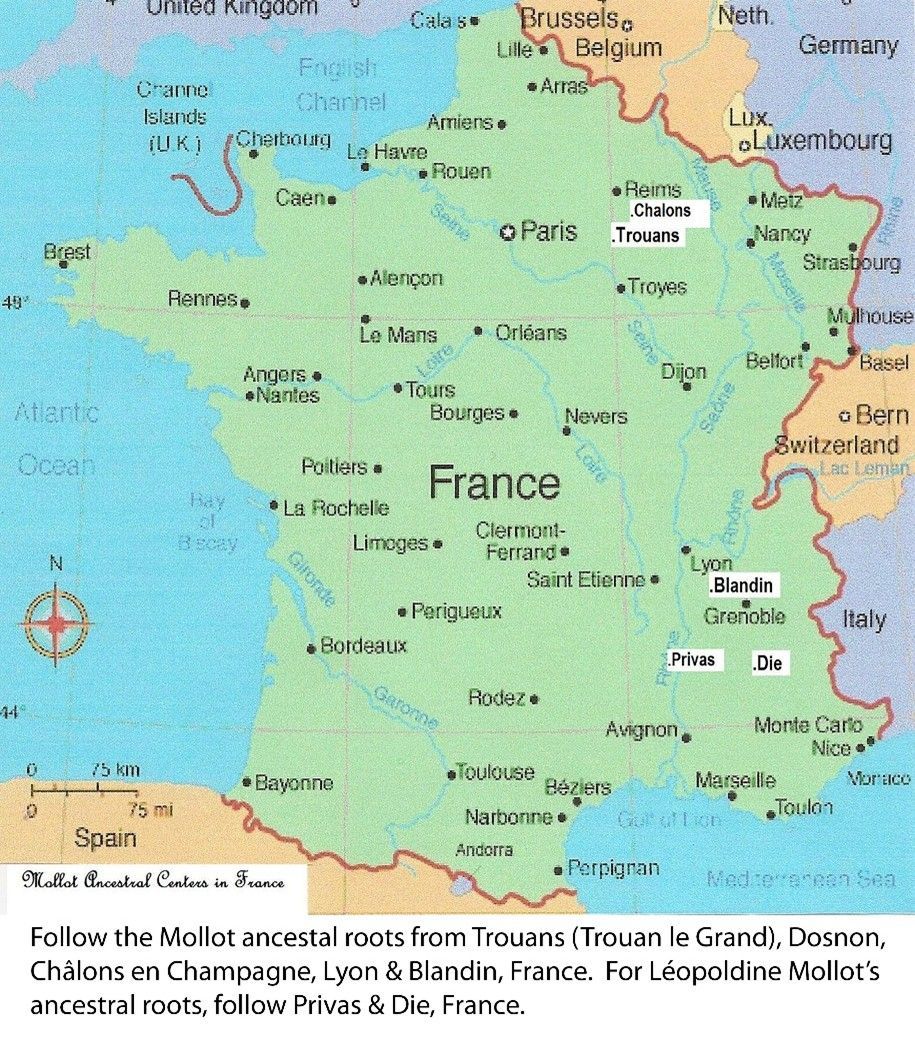
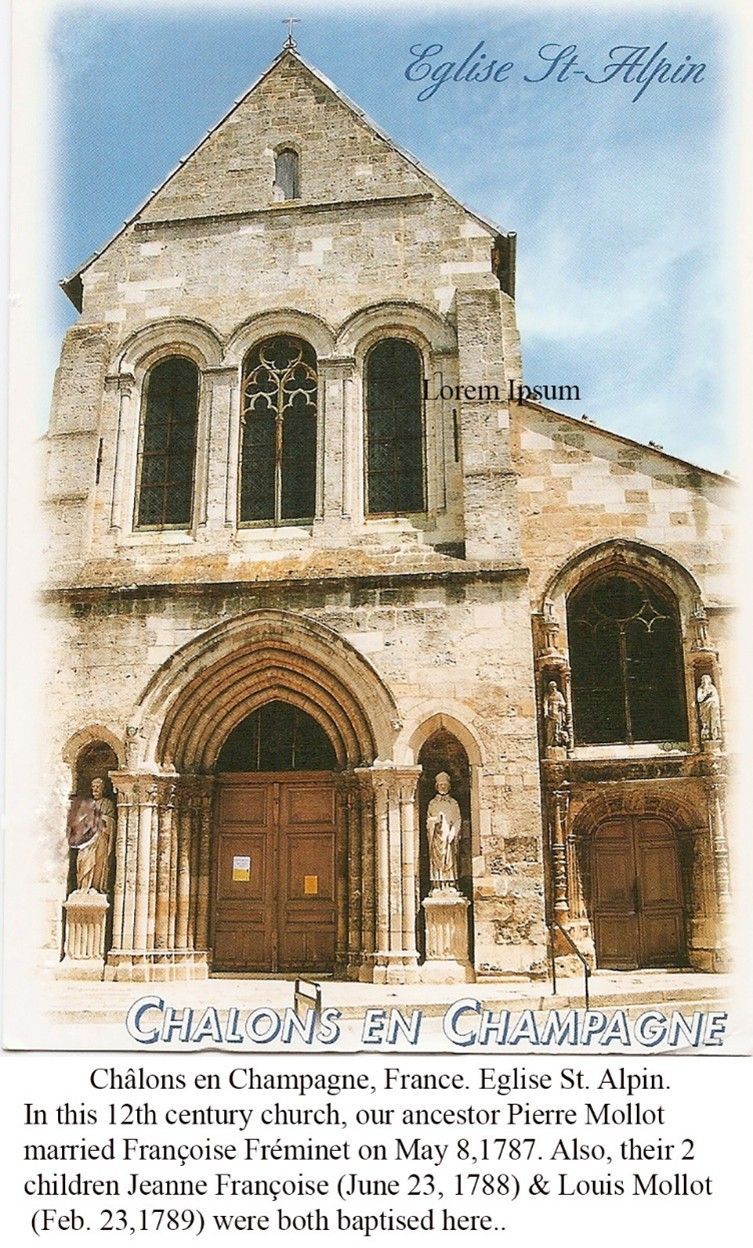
However, before we get into Fortuné’s story, we need to turn the page back to his grandparents Pierre and Marie Joseph Françoise Fréminet of Chalons sur Marne now named Chalons en Champagne. Chalons en Champagne is situated about 190 kms or 2 hours east of Paris in the Department of Marne. Pierre Mollot, born May 23, 1747 then owned and operated a “mercerie,” a clothing store of new styles of fabric and accessory items related to the textile industry such as buttons, needles, and thread. His wife Francoise, born February 25, 1756, also from Chalons, was from a very prominent family that were well known as one of the top ten “House of Champagnes” in Chalons. In fact, only about 40 kms east of Chalons, you will find the commune of Trouans. Trouans is the actual cradle of the Mollot family where we have been able to trace our Mollot ancestry back to the year 1618. The community of Trouans split by the L’huitrelle River was originally made of two communes or towns, Trouan le Grand and Trouan le Petit. The two communes separated by the L’huitrelle River was amalgamated in 1973 into one community called Trouans.
However, before we get into Fortuné’s story, we need to turn the page back to his grandparents Pierre and Marie Joseph Françoise Fréminet of Chalons sur Marne now named Chalons en Champagne. Chalons en Champagne is situated about 190 kms or 2 hours east of Paris in the Department of Marne. Pierre Mollot, born May 23, 1747 then owned and operated a “mercerie,” a clothing store of new styles of fabric and accessory items related to the textile industry such as buttons, needles, and thread. His wife Francoise, born February 25, 1756, also from Chalons, was from a very prominent family that were well known as one of the top ten “House of Champagnes” in Chalons. In fact, only about 40 kms east of Chalons, you will find the commune of Trouans. Trouans is the actual cradle of the Mollot family where we have been able to trace our Mollot ancestry back to the year 1618. The community of Trouans split by the L’huitrelle River was originally made of two communes or towns, Trouan le Grand and Trouan le Petit. The two communes separated by the L’huitrelle River was amalgamated in 1973 into one community called Trouans.
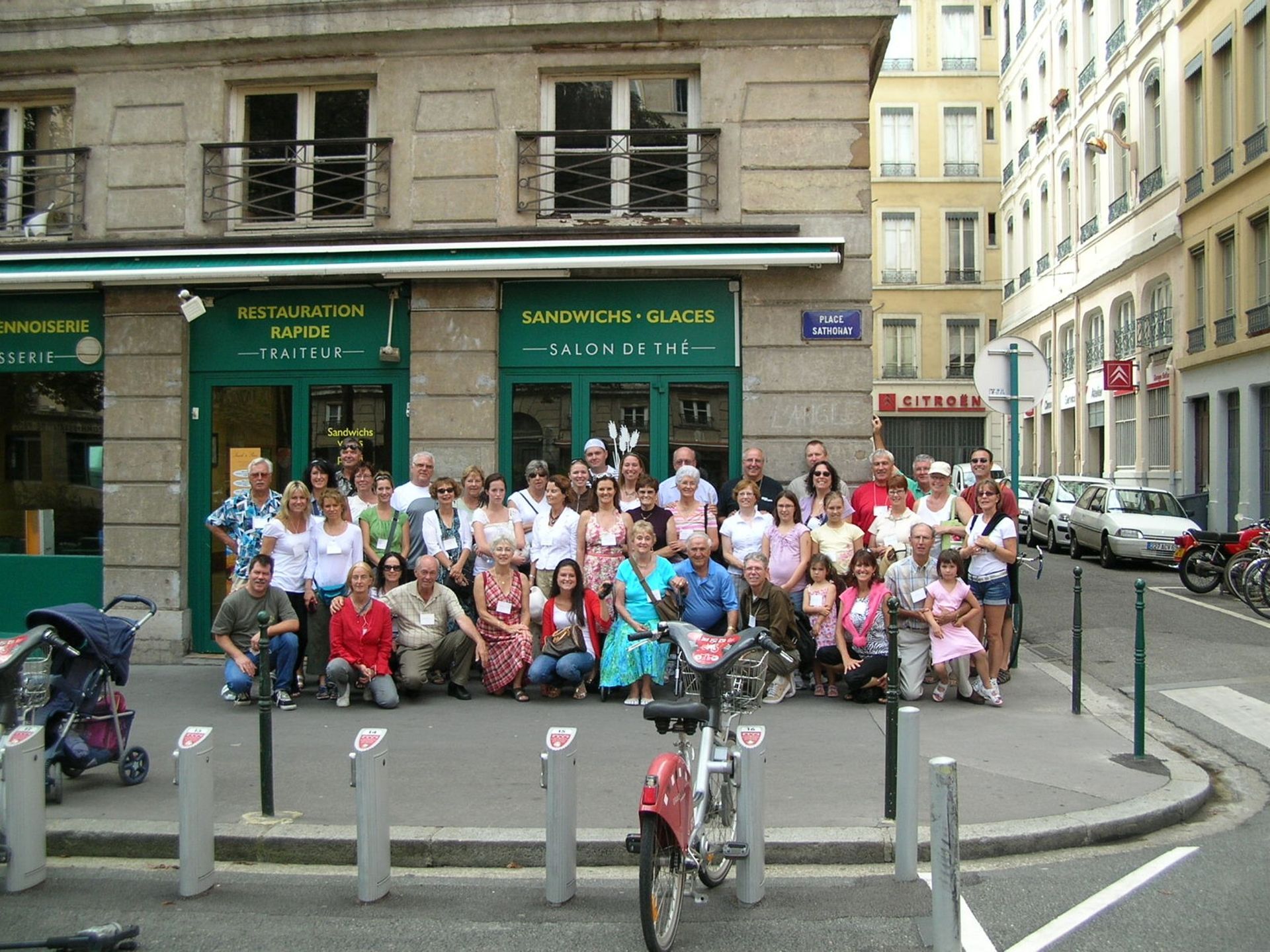
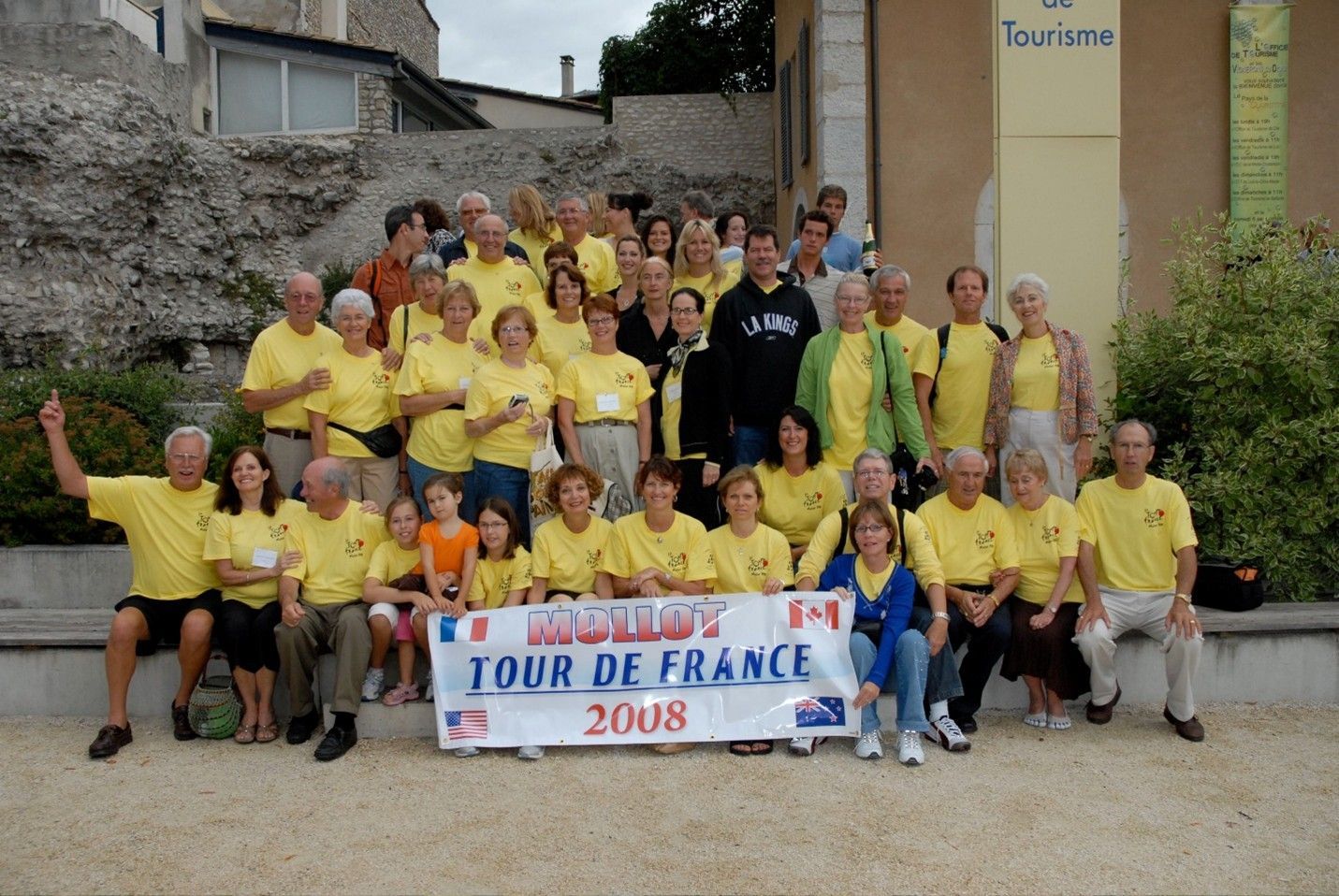
Lyon - No.4 Place Sathonay - Where Fortuné Louis Mollot was born on Nov. 4th, 1845. Photo of 2008 Mollot Tour de France group.
In the year 1844 on December 29, Louis Fortuné Mollot, at the age 53 married Thérèse Annequin in Chabons in the Department of Isère. At the time of their marriage, as part of her dowry, Thérèse received from her parents the 42 acre property in Blandin that Chateau Blandin is built on today. Chabons happens to be very close to Blandin as they are also both in the very picturesque “Vallée de la Bourbe.” Along with a new bride, Louis Fortuné also adopted a 12 year old step daughter by the name of Thérèse Pauline Annequin. Ten months later on November 4th, 1845, Louis Fortuné and Thérèse had their first and only child and they named him Fortuné Louis Mollot, my great grandfather. In France at that time, it was quite customary to name a new born child with the father or mother’s
Lyon - No.4 Place Sathonay - Where Fortuné Louis Mollot was born on Nov. 4th, 1845. Photo of 2008 Mollot Tour de France group.
given names thus Louis Fortuné Mollot and his son Fortuné Louis Mollot.
Louis, Thérèse, step daughter Pauline and new born Fortuné did not live at #4 Place Sathonay long. The family moved to a home at 18, rue du Beguin in Lyon as per photo below. Fortuné grew up in Lyon and enjoyed the arts. His summers holidays were spent mostly in the countryside near Blandin which he really enjoyed and where his mother’s relatives lived.
As mentioned in his memoires, Fortuné had really no interest in business especially of his father Louis but enjoyed the arts and had a real talent for drawing. At a young age, Fortuné was then enrolled and attended le Lycée de Lyon which was a fine arts school.
On December 12th 1862, his beloved mother Thérèse dies at the young age of 55 of cancer. At the time of his mother Thérèse’s passing, Fortuné was 17 years of age. Fortuné as a teenager took this event very hard as mentioned in his memoires. Then shortly thereafter, tragedy struck again when on March 19th of 1869, he fell off a horse and seriously injured a leg leaving him partly paralyzed. Fortuné in his memories indicates that because of his disability, he would rather be considered as an unsuitable to run his father Louis’s silk business and that he far preferred focusing his life on being an artist, the profession that he really preferred. “I was an artist much more than a businessman or accountant” as indicated in his memoires. Sadly, on June 10th 1871, his father Louis Fortuné dies of a heart condition in what is known to be the old farmhouse which his father Louis had recently purchased in Blandin. [Lyon , Fr,- Vic Mollot at #18, rue du Begin where Fortuné grew up.]
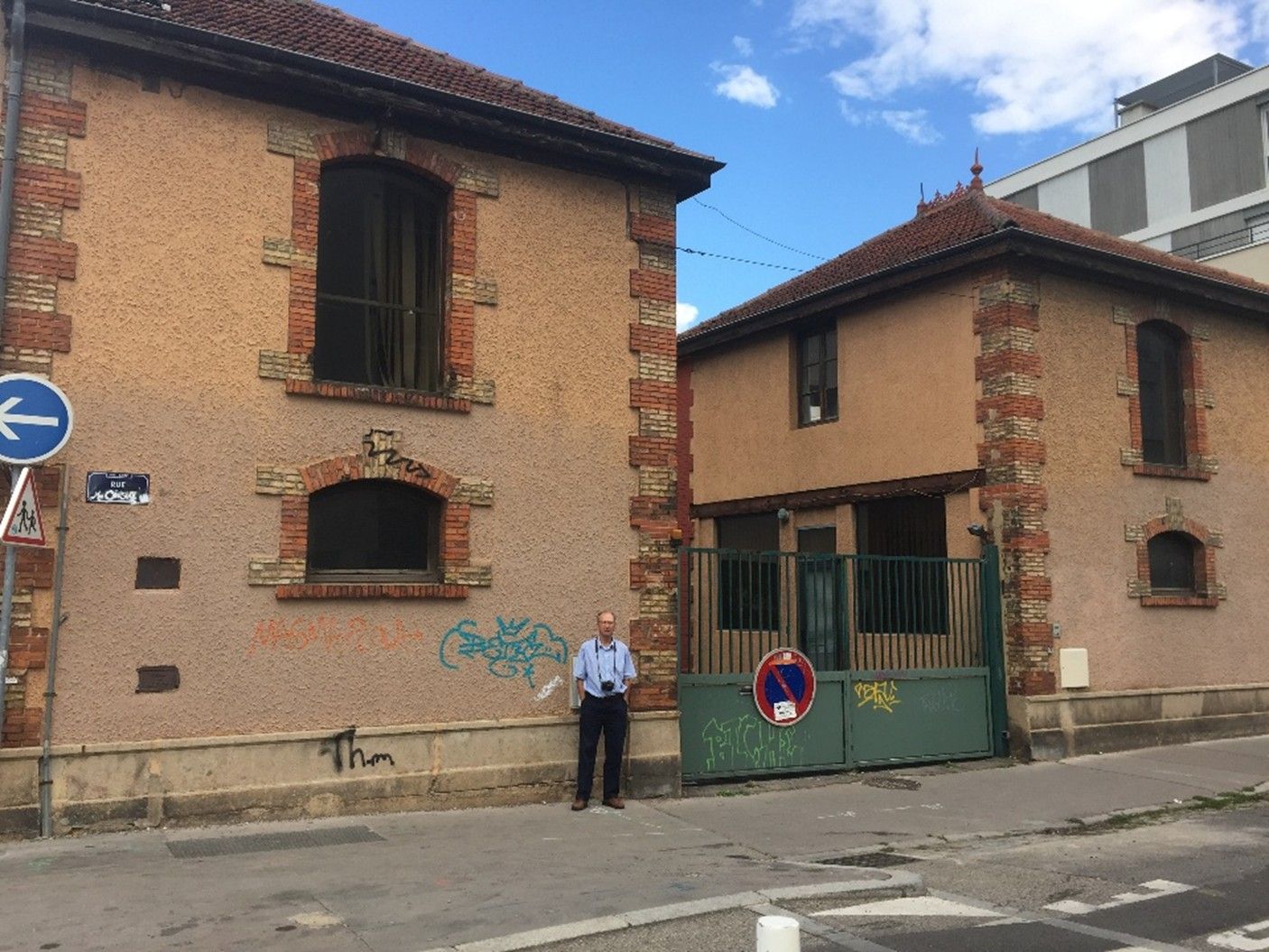
Lyon , Fr,- Vic Mollot at #18, rue du Begin where Fortuné grew up.
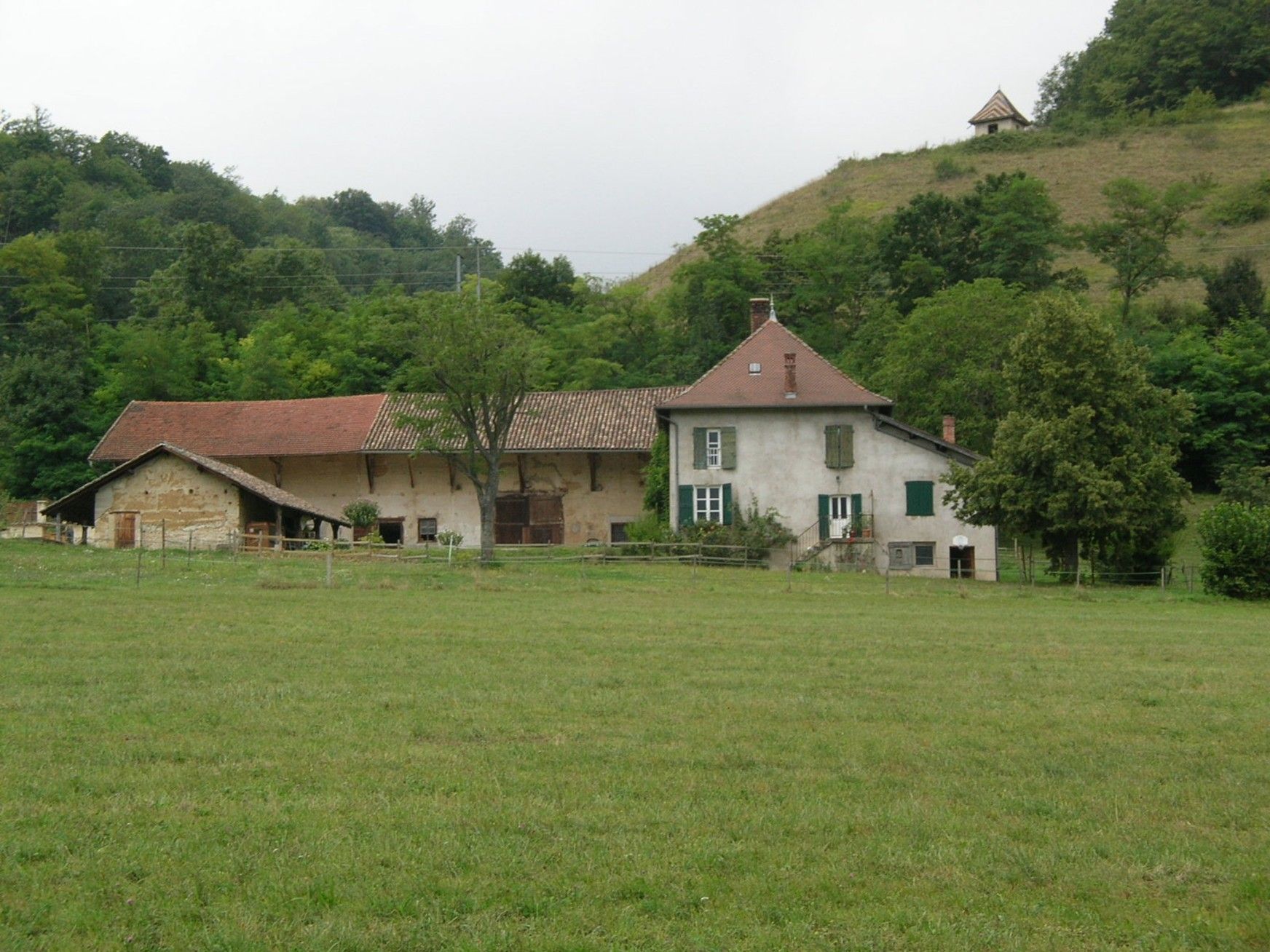
Blandin, France. Old Farmhouse where Louis Fortuné Mollot died on June 10, 1871. The farmhouse and attached barn is still in use today.
At the time of his father’s death, Fortuné was only 25 years of age. As a result, his father Louis Fortuné having been a very successful business man in the silk industry in Lyon leaves his son Fortune a small fortune.
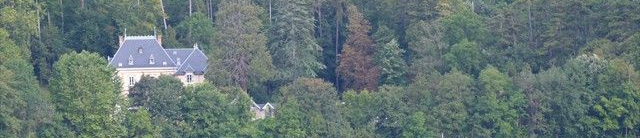
So, at the age of 25 in 1871, Fortuné, having lost both his parents and having surprisingly inherited a small fortune from his father Louis decides to build a chateau on the 42 acre property in Blandin. His mother Thérèse had always dreamed of having such a chateau in the valley. Fortuné then hires an architect by the name of M. Bourbon to build the chateau
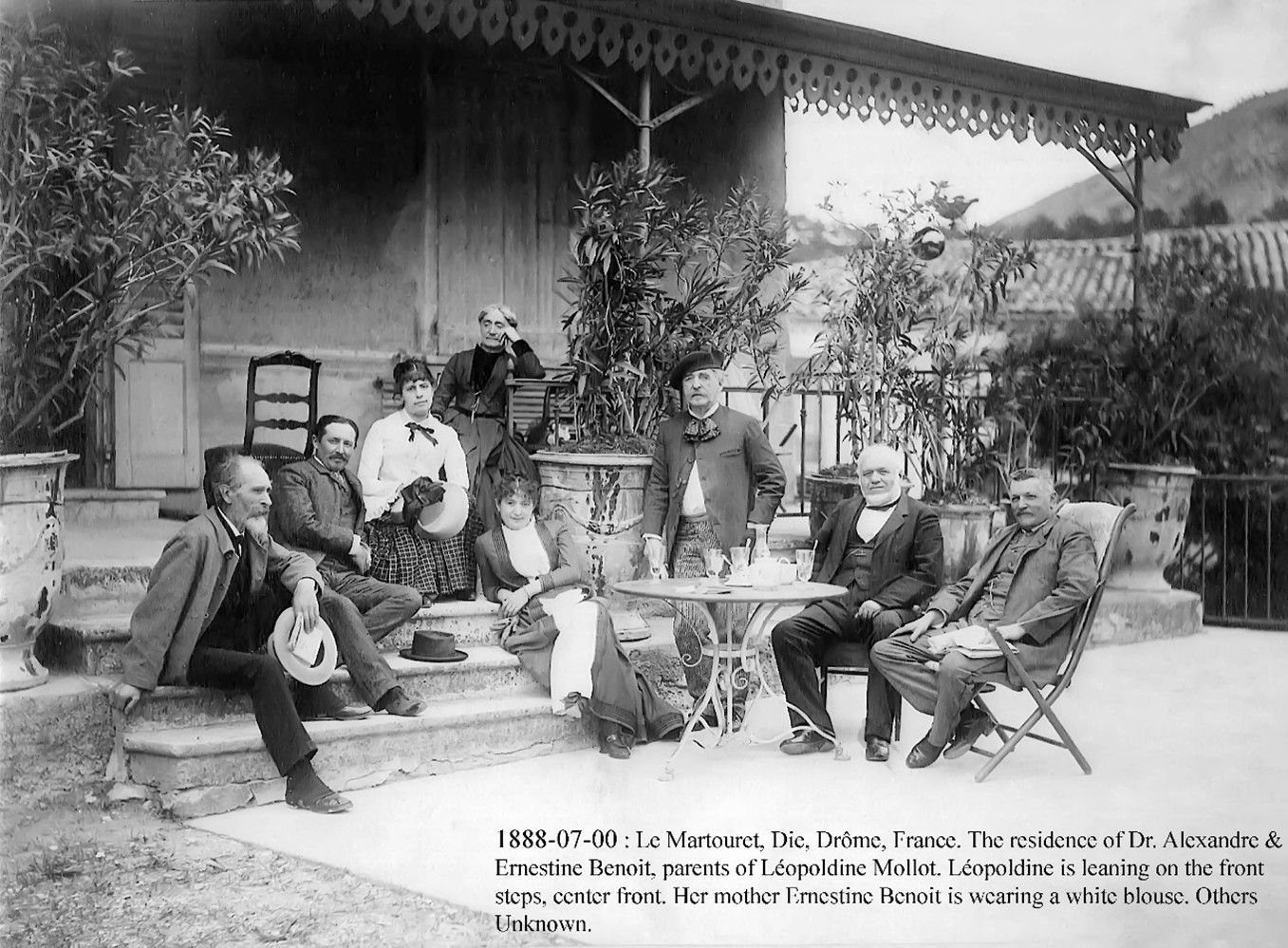
During the construction of the chateau in July of 1871, Fortuné seeks further treatment for his disability and from an advertisement in the newspaper which brings him to “Le Martouret” a therapeutic resort in the French Alps in Die, France. There, Fortuné meets the love of his life Léopoldine Benoit, one of the proprietor’s daughters of Dr. Alexandre Benoit. Fortuné and Léopoldine were married shortly thereafter. The civil marriage took place on October 4th, 1872 and the following day, the church celebration took place at the Cathedrale Notre Dame in Die, France, Fortuné being 26 years old and his new bride being 20 years old.
The civil ceremony followed by the church service became a common practice after the French Revolution of 1789 in France. After their wedding in October of 1872 and for their honeymoon, Fortuné and Léopoldine toured Italy and Austria and then settled in Lyon. To Fortuné’s dismay, Léopoldine do not enjoy living in a rural setting such as Blandin and much preferred Lyon where she could enjoy the Grand Theatre of Lyon, etc. As a result, the couple spent their spring and summer in Blandin and the rest of the time in an apartment in Lyon in the suburb of Montplaisir at #2 Bourse Street. In Lyon, Fortuné got very involved in “the Society of Artists” and also would exhibit his paintings at “le Musée des Beaux Arts” in Lyon.
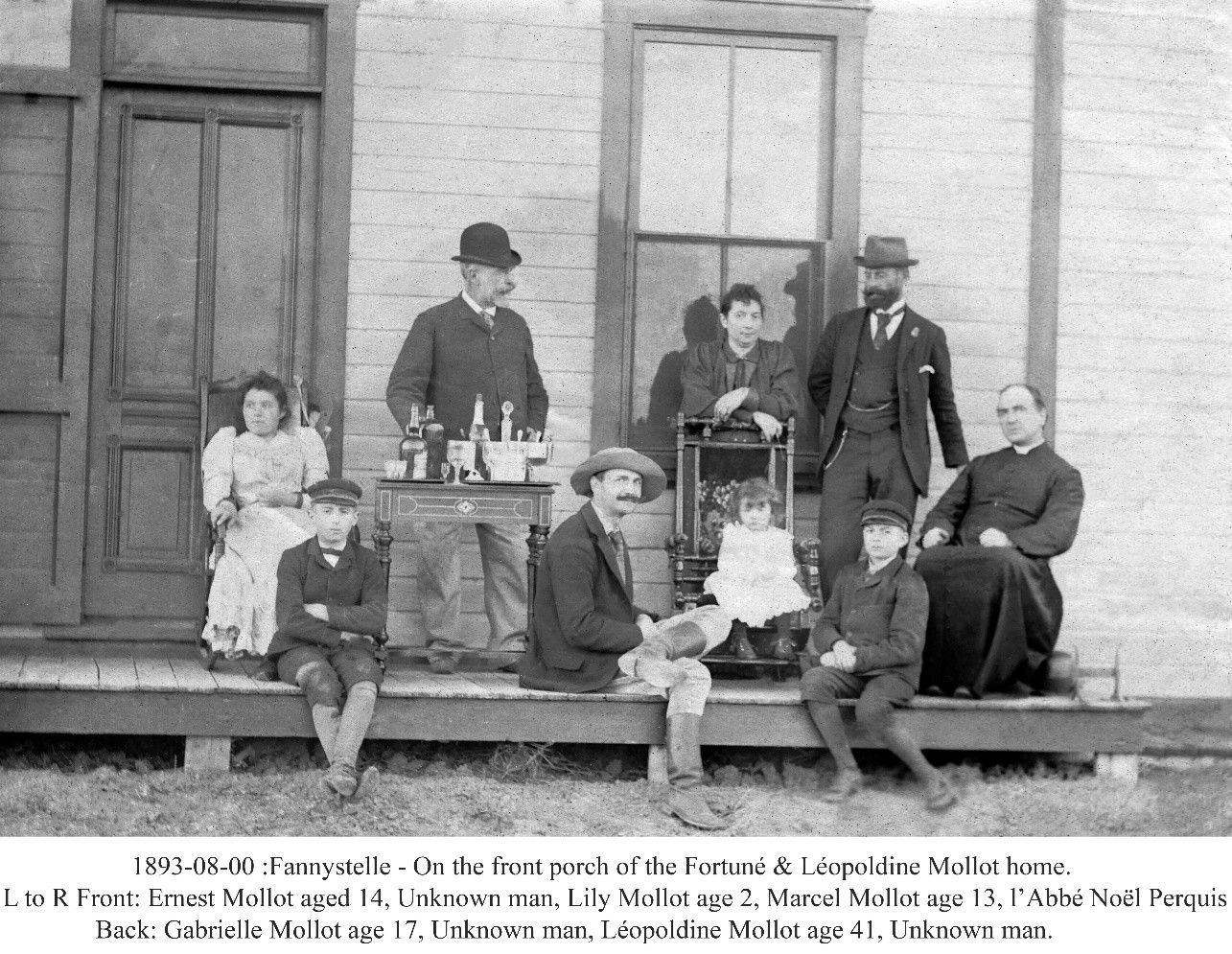
On December 4th, 1875, their first child Gabrielle was born in Lyon, France followed by Ernest, born on August 29, 1879 in Die, Marcel, my grandfather, born in Blandin, then Marie Louise (Lily), born on February 27, 1891 also born in Blandin. The last being Thérèse was only born on October 22nd, 1893.in Fannystelle, Manitoba. She is the first Mollot that was born in Canada.
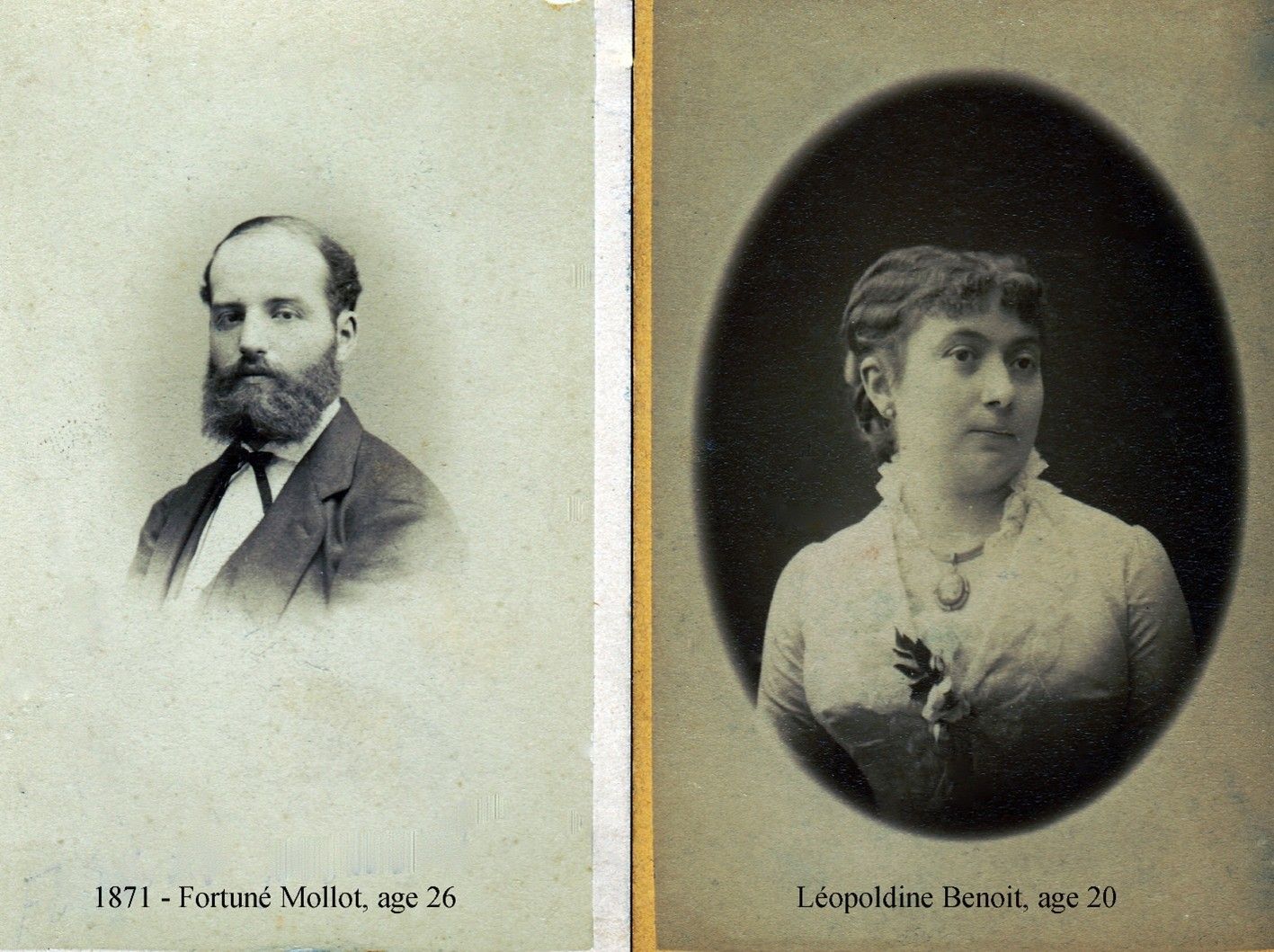
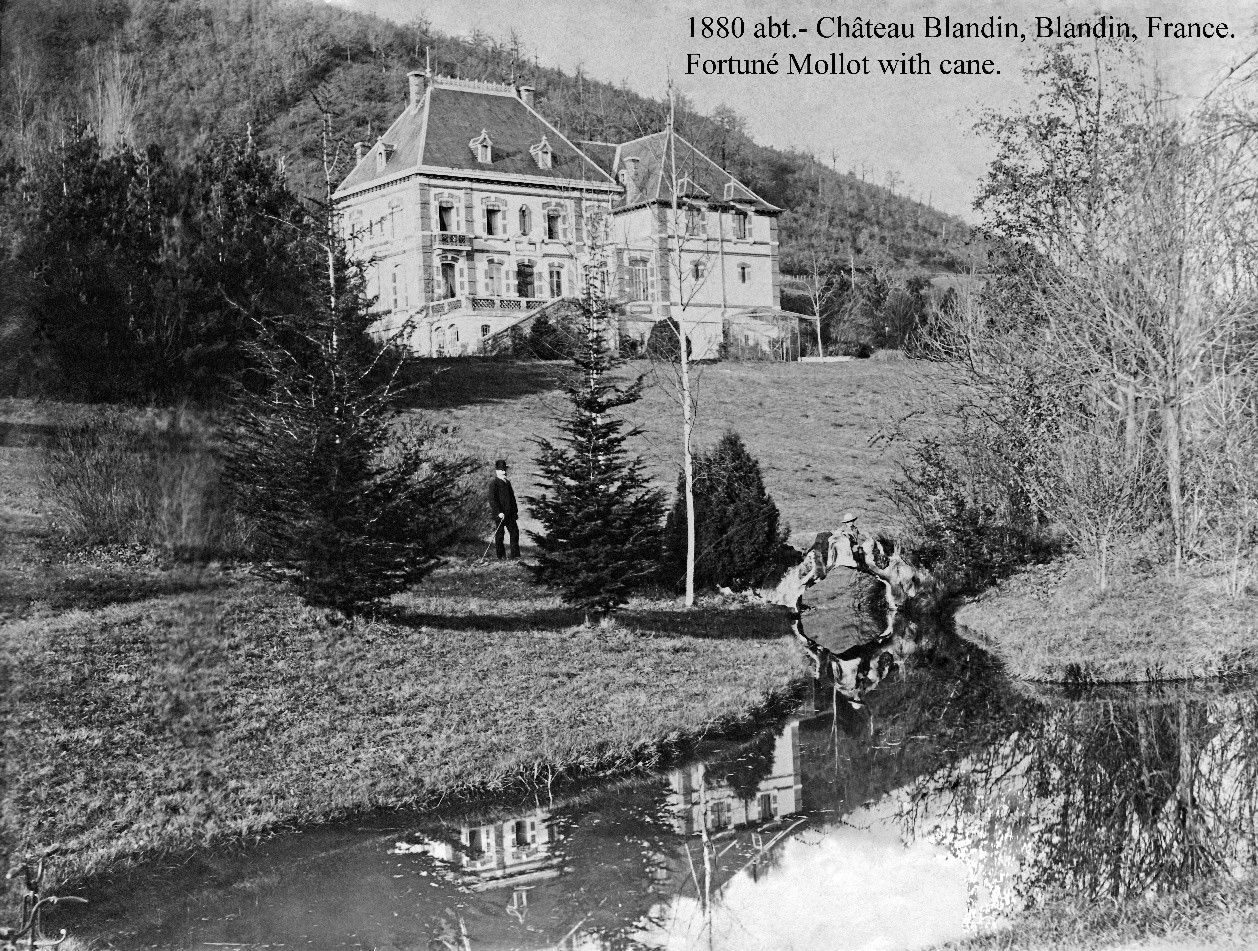
For a number of years in Blandin, Fortuné was also very involved in the community as a town councilor along with his painting. In fact, he also donated the property where the existing cemetery is located. However, Fortuné had a number of misfortunes in Blandin besides building Chateau Blandin which cost much more than originally estimated. Around the years 1880, he invested heavily in the stock market and lost most of his assets. Then to make matters worse, in order to supplement his income, he decided to have vineyards. Unfortunately, a disease called “phylloxera” struck as did in all of Europe and all his vines were totally destroyed. Obviously, Fortuné was not a savy financier or farmer.
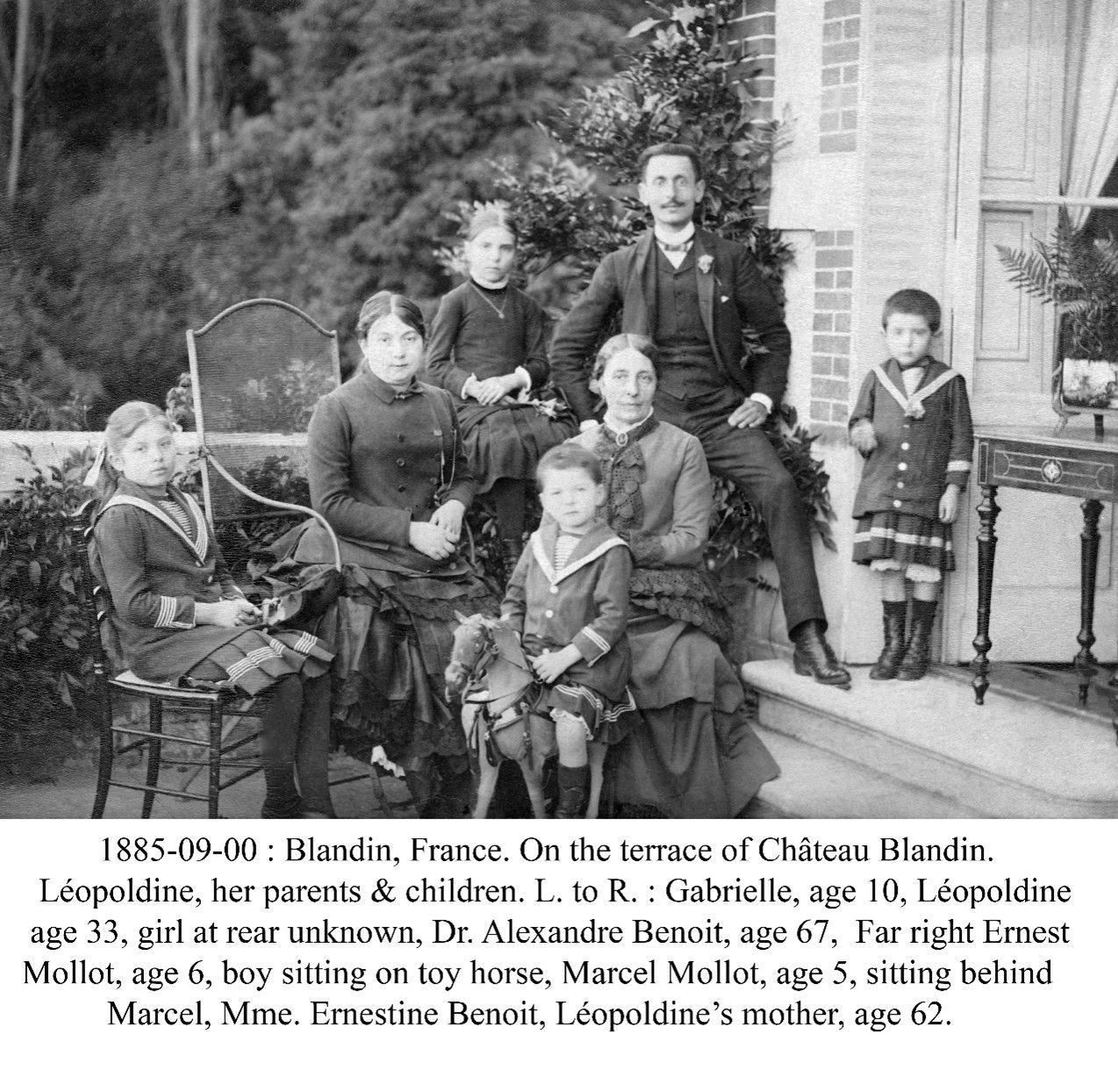
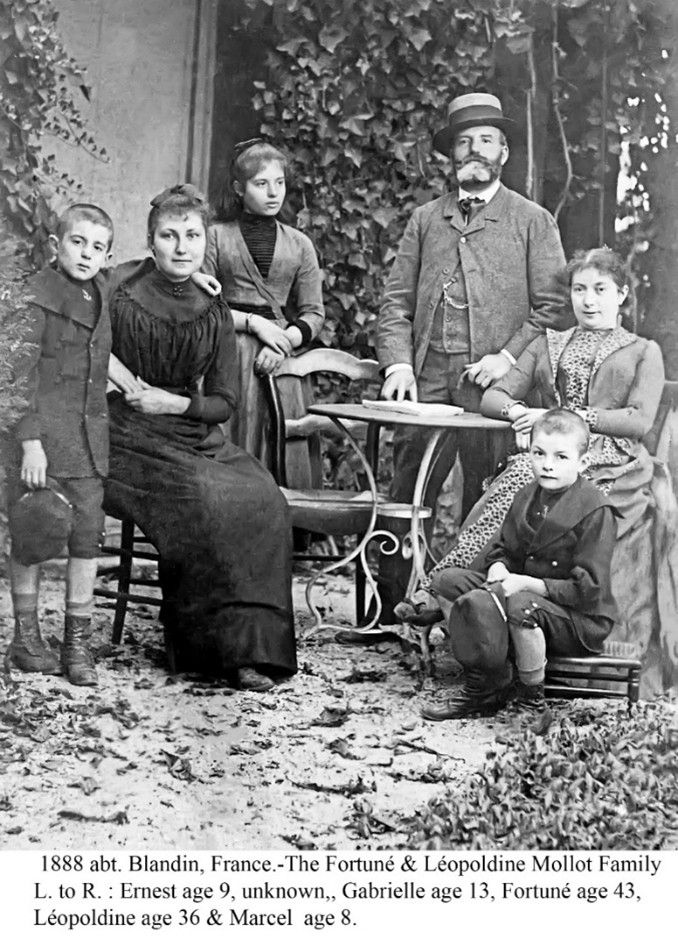
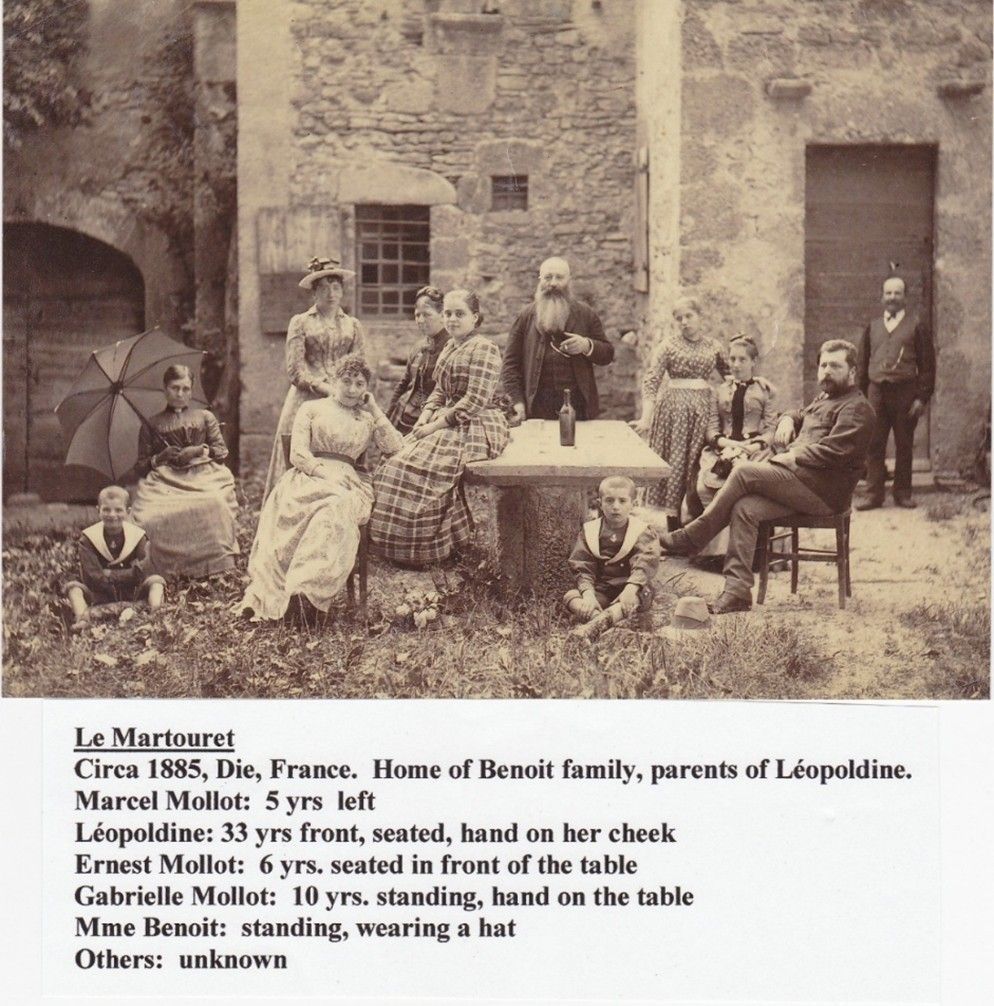
These photos depict some of the members of the Fortuné Mollot family around the years 1885. Along with a number of photos, we are also fortunate to have some 17 paintings of Fortuné. My wife Lucille and I were most fortunate to find some of his paintings in Marseilles, France as well as Lausanne, Switzerland and were able to purchase them. Now, they hang in our home! This colored photo below are 2 only-20 inch ceramic plates signed and painted by Fortuné, originally owned by Cristina Pellet of Lausanne, Switzerland.
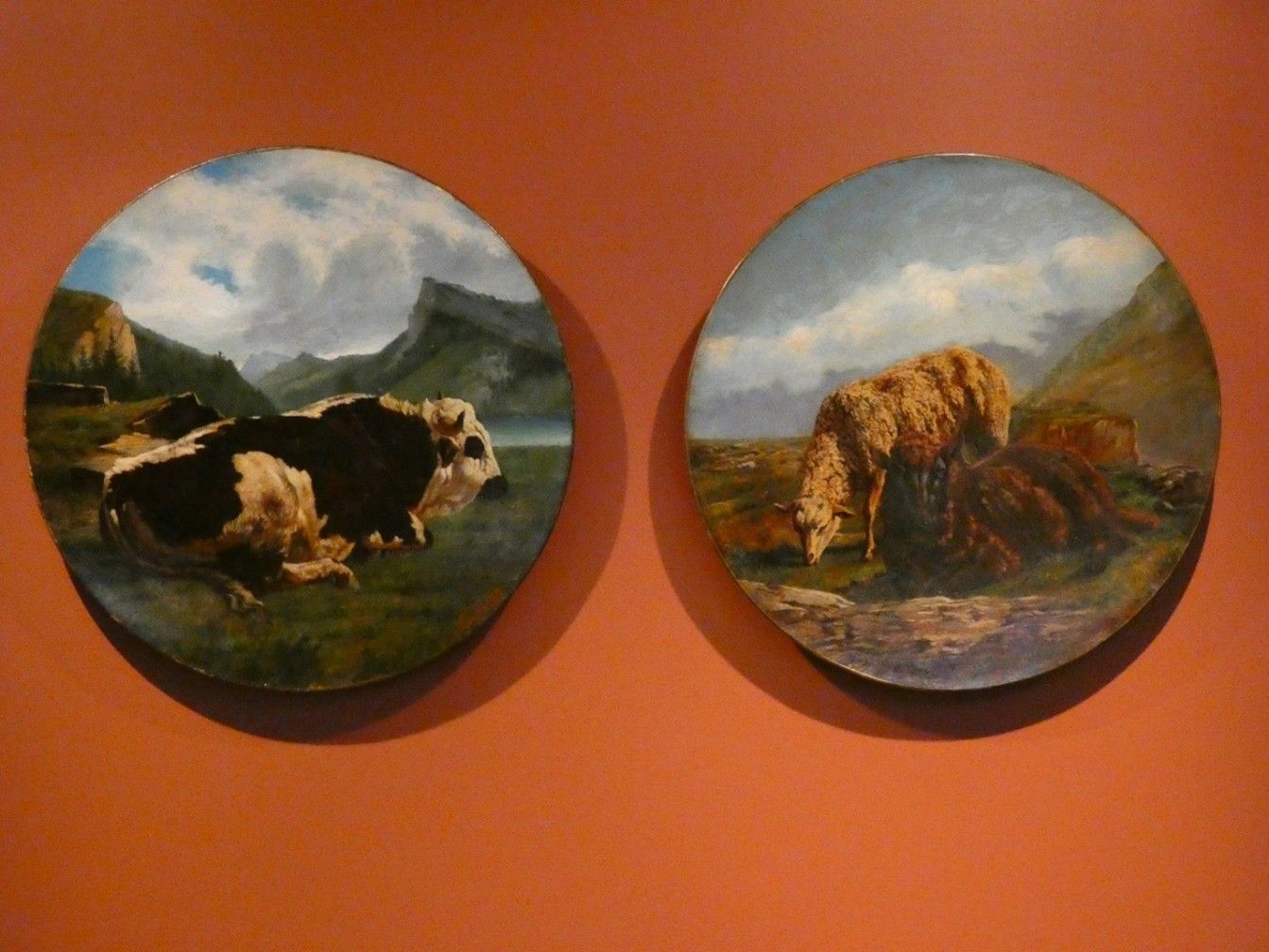
France during the late 19th century was a turbulent era of shifting governments because of scandals and internal conflicts over religion and national unity. Fortuné had also lost a good portion of the fortune he had inherited from his father Louis and also likely his pride. For social, political, economic and religious reasons, Fortuné Mollot decided to immigrate. He no longer thought that France was the place to raise his family and that there would be better opportunities for them in other countries. But where to immigrate to? According to his memoires, they had thought of either Haiti or Canada. The decision was made to immigrate to Canada so and on August 25, 1892 aboard the steam ship “Circassion” from Liverpool, England, the Mollot family set sail for Canada. Fortuné was 47 Years old, Léopoldine was 40, Gabrielle was 16, Ernest 13, Marcel 12 and Marie Louise (Lily) a baby, was 1 ½ years old. Just Imagine, between the ocean voyage and the C. P. rail journey to the west, it took them some 21 days! They only arrived in Winnipeg on September 14thand that’s not all! According to his memoires, Fortuné and Léopoldine had only planned to immigrate to Manitoba, Canada. They had not established if they would live in the city or countryside. After their arrival in Winnipeg on September 14th, they quickly enrolled Ernest and Marcel at le “College St. Boniface”. With the assistance of the St. Boniface Archbishop’s office, they visited the towns of St. Pierre, Lorette, St. Malo and others and finally settled in Fannystelle on October 19th, 1892. They were ill prepared to live in Canada. They had brought with them such items as a mayonnaise maker, paintings, etc. Being late in the fall, they first rented a house in town and later in the spring of 1893 had a house built. Later in 1894, Fortuné purchased an 80 acre piece of land just south of town with the intent of raising sheep and cattle. Unfortunately, the available water was heavy on alkali and not suitable for livestock so they had to abandon the project. As previously mentioned, Fortuné was not an astute business man and certainly not a farmer. This 80 acre section of land that they had purchased became known in my early years as the swamp.
10 years later in July of 1902, Fortuné, age 57 and Léopoldine, age 50 abandon living in Fannystelle and moved to Winnipeg where their oldest daughter Gabrielle was teaching piano. The Mollots lived in different locations in Winnipeg and never to my knowledge did they live in St. Boniface. As you may be aware, prior to amalgamation the cities were two different identities with the Red River dividing them. Today, it is one city.
One of the more notable rental apartments that they lived in with their daughter Gabrielle was called “the Warwick” located at 366 Qu’Appelle Street in unit 311. It was a beautiful apartment in downtown Winnipeg next to Central Park and had such amenities as a large balcony, a horse stable, an atrium and a cigar room.
On April 24, 1924, at the age of 78, Fortuné Louis Mollot dies and is buried in the St. Boniface Cathedral Cemetery. His wife Léopoldine, age 72, who had never really enjoyed living in Canada primarily because of the climate and culture, leaves shortly thereafter in October, 1924 for New York to live with her youngest daughter Thérèse. Léopoldine never comes back to Canada. After a year in 1925 in New Jersey, Léopoldine then moves to Lausanne, Switzerland. 7 years later in 1932, her daughter Thérèse who was then living in Los Angeles, California goes to Switzerland and brings her back to California. Léopoldine spent her final golden years in L. A. and dies on April 20th, 1944 at the age of 91. Léopoldine is buried in the Holy Cross Cemetery, Section C, Group 411, Grave # 2 in Culver City, California.
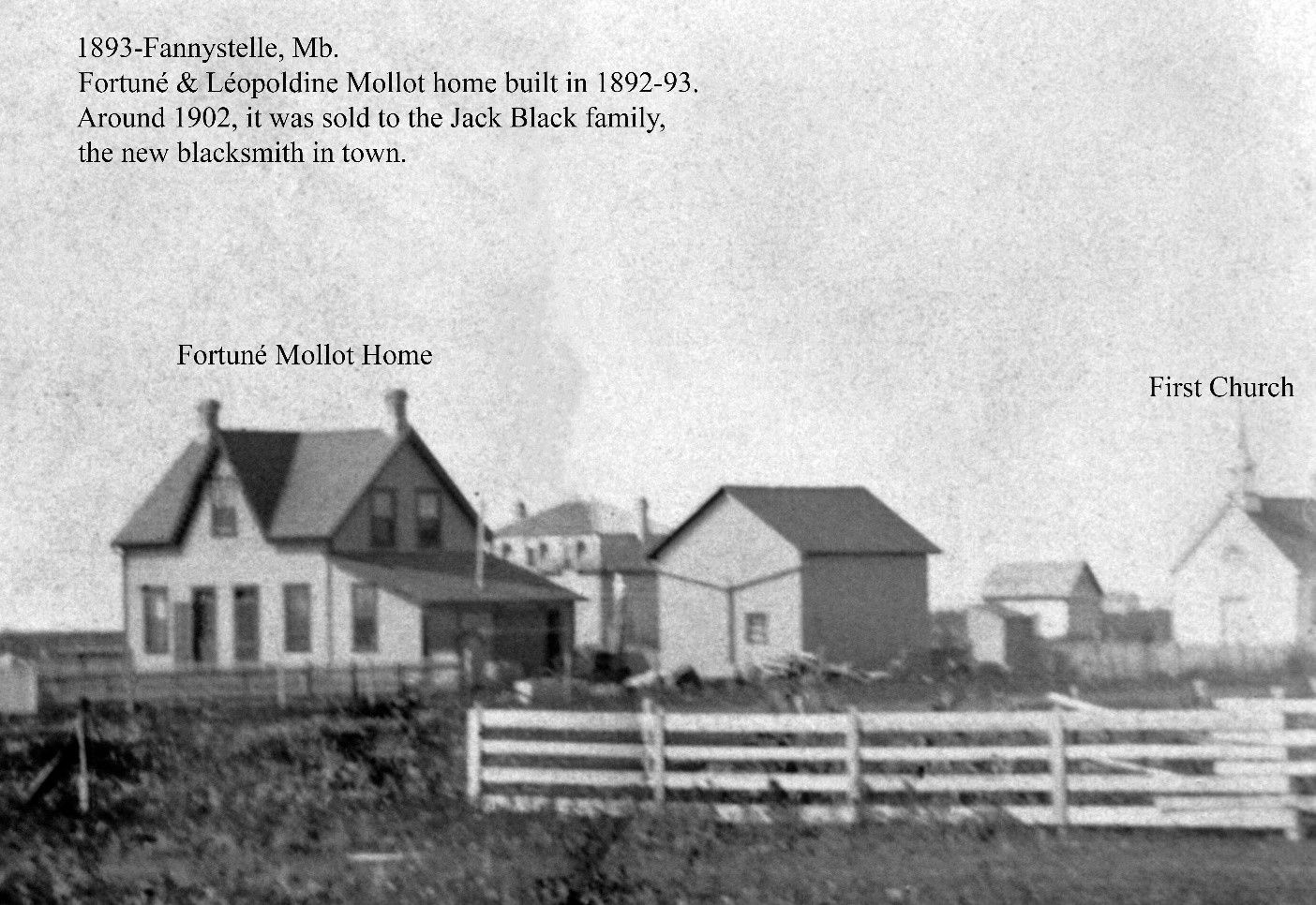
Fortuné Mollot house in Fannystelle. Photo taken the 1900’s.

So one might wonder why the name Mollot is synonymous with the town of Fannystelle? Well, to start things off, the Fortuné Mollot family were one of the first families in the town as told by Noel Bernier, a historian. When the Mollot family first arrived in 1892, there were only 29 people. In 1943, there was a population over 450 people in Fannystelle. Today however, the population is a mere 90 people. Farming today has drastically changed. On average, farms then were only about 320 acres. Today, they are in excess of 3000 acres. At one time, there were four implement dealers and garages in town one being my father John with Mollot Garage. Today, there are none! The five Arnal families all had large families with a total of 81 offspring. Today, there is only one left. Unfortunately, like many small agricultural communities, Fannystelle is a dying town.
Of all the five children that Fortuné and Léopoldine had, only one made Fannystelle his home and that happens to be my grandfather Marcel. Gabrielle moved to Winnipeg, set up a music studio and taught piano. Ernest ended up being a superintendent in various laundry businesses and Marie Louise (Lily) and Thérèse pursued careers in acting. Marie Louise married Joseph Theriault and made Timmins, Ontario her home while Thérèse adventured to New York and first married James Dolan.
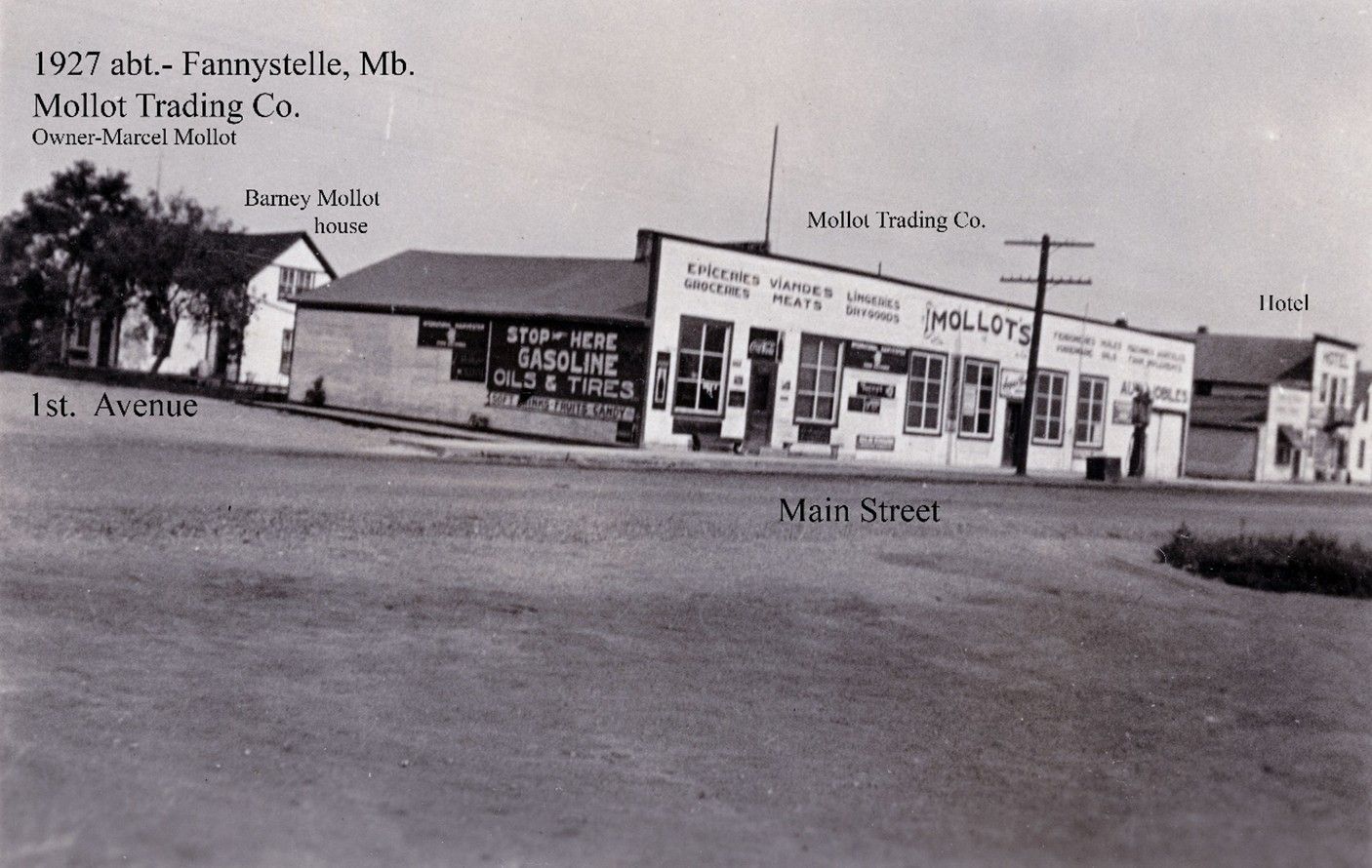
Before Fortuné and Léopoldine moved to Winnipeg in July of 1902. Marcel was married to my grandmother Eugenie Piché on May 27, 1901 in Fannystelle, Manitoba where he first set up a butcher shop. They had five children: Archie (Achille), Alice, my father Jean Baptiste, Gabriel (Barney) and Louis. My grandfather Marcel was a very successful businessman and prospered in different enterprises from grocery stores to hog operations. The following photo below is a strip mall in Fannystelle that he operated just before his untimely death at the age of 54 on December 4th, 1934.
The Mollot name is now only a memory in the town of Fannystelle. My father John, mother Blanche, my siblings Claude and Martin moved away in August of 1962 and were the last Mollots in Fannystelle.
So, one wonders why the Mollots ever left France in 1892 in the first place? They lived such an aristocratic lifestyle in France. It was as previously mentioned for social, political, economic and religious reasons. Fortuné and Léopoldine really seeked a better life in a foreign country for their children. Canada offered better opportunities!
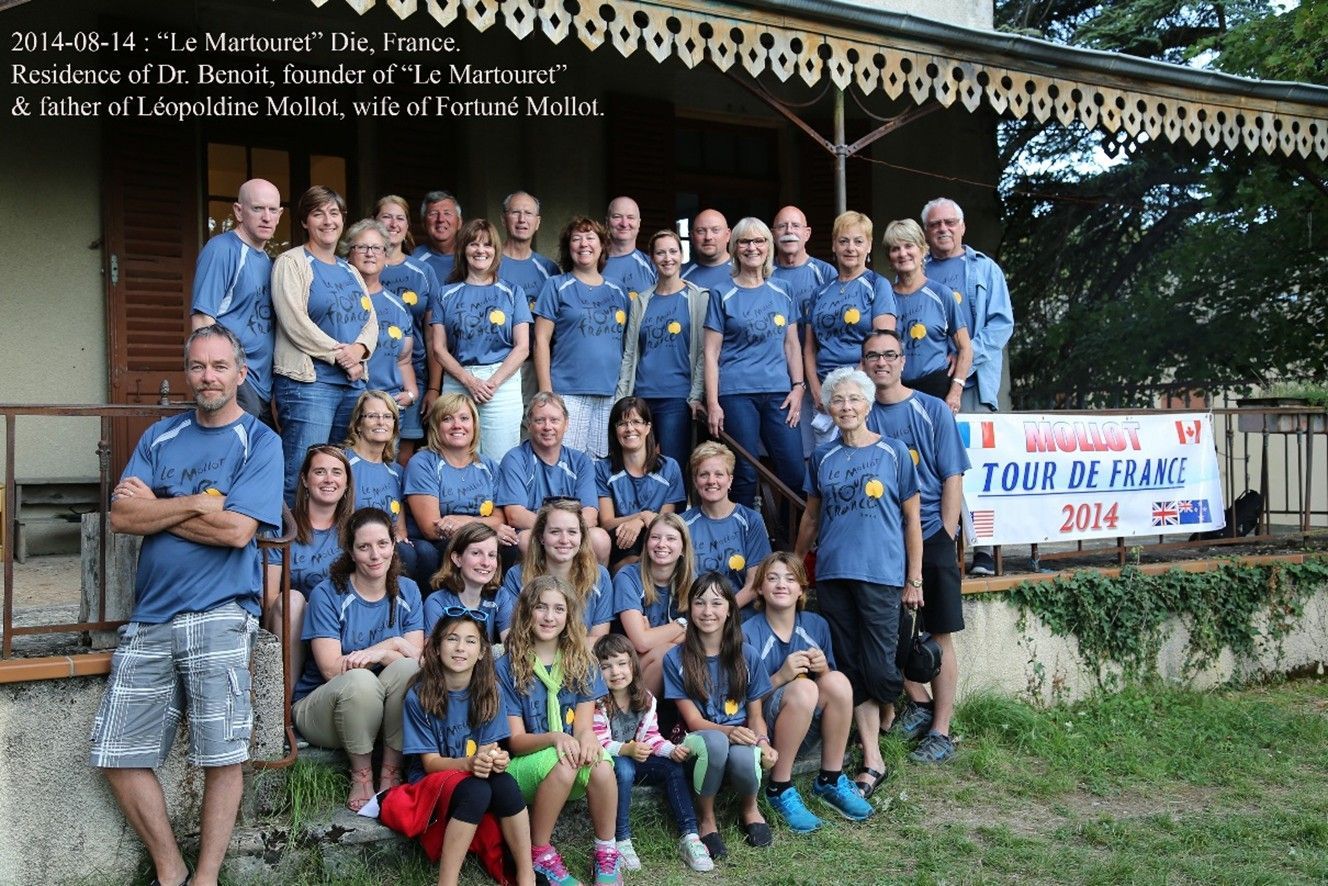
In the years 2008 and 2014, we had organized bus tours for family members called the “Mollot Tour the France” where we toured all of our ancestral roots. These bus tours were hugely successful. For these events, Fortuné’s great, great grandsons Marc & Roger Mollot did write a song called “Why the Hell did I Ever Leave?” The song really depicts the “Life of Fortuné and Léopoldine Mollot.”
I’ve included a few additional photos for your interest. I also do hope that you have found my perspective of my great, great grandparents informative. Enjoy!
V. A. Mollot